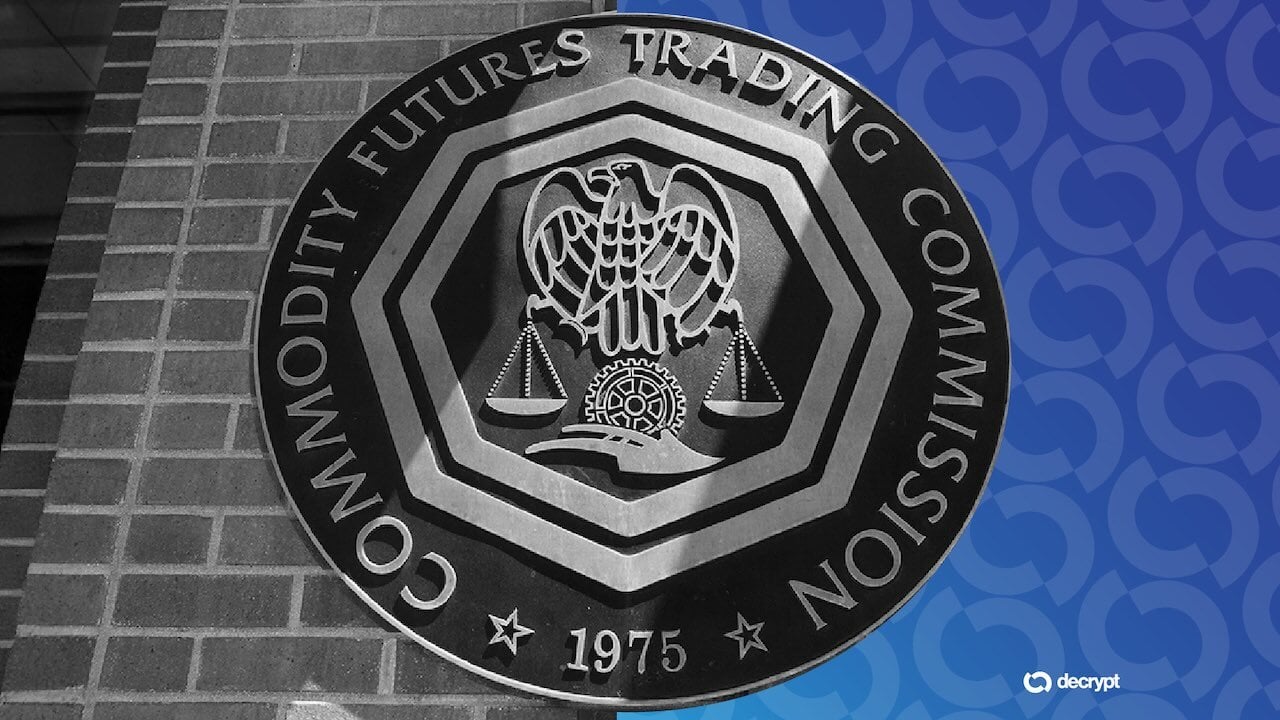
CFTC Proposes Classifying Sports, Political Bets as Swaps
The CFTC's Oct. 9, 2026 rules would define sports, political, cultural and weather event contracts as swaps, excluding casino-style gambling entirely.

Summarize with
Prompt · remember Payney
The Commodity Futures Trading Commission on Oct. 9, 2026, published a notice of proposed rulemaking that would classify sports, political, cultural and weather event contracts as federally regulated swaps, according to a filing reviewed by DeFiPrime. On the same day it issued a separate interim final rule, already in effect, stating that casino-style gambling products such as sportsbook wagers and casino games are not swaps at all.
What the CFTC actually proposed
On October 9, 2026, the Commodity Futures Trading Commission published proposed rule RIN 3038-AF82 to expressly include event contracts in the definition of a swap, and the proposal names contracts based on sports, politics, cultural and weather events. DeFiPrime, which reviewed the filing, reported that the change is a jurisdictional rule, not a new product approval, and that the CFTC says event contracts can already fall within four parts of the Commodity Exchange Act's swap definition, covering transactions whose payments depend on an event with a potential financial, economic or commercial consequence, commodity options, instruments commonly known to the trade as swaps, and combinations or options on covered transactions.
Decrypt reported that CFTC Chairman Michael Selig said "casino-style gambling products are not derivatives", the rationale behind the second measure, which excludes casino-style gambling like sportsbooks and casino games from the swap definition. That gambling exclusion took the form of an interim final rule, a procedural route Gambling News described as unusual because it would come into effect shortly after publication in the Federal Register, although the regulator would normally also gather public feedback first, and agencies usually have to justify this approach. The swap-definition proposal, by contrast, follows ordinary notice-and-comment procedure, and written comments must be received within 30 days of the proposal's publication in the Federal Register. Gambling News also reported that the CFTC sent both measures to the White House Office of Management and Budget for review earlier in the week before publication, and that the contracts at issue are primarily used by prediction market operators like Kalshi and Polymarket.
Why the CFTC moved now: a split among federal appeals courts
The timing follows conflicting rulings this year on whether sports event contracts meet the legal definition of a swap. Gaming.net reported that on August 28, 2026, the Ninth Circuit adopted the interpretation in KalshiEX v. Assad that described the substance of the contracts as sports gambling and concluded they are likely not swaps, with a petition for rehearing and rehearing en banc filed on September 9, 2026. Less than a month later, on September 25, 2026, a Sixth Circuit panel in KalshiEX v. Schuler also held the contracts are not swaps, reasoning that the underlying event must be inherently associated with a financial, economic, or commercial consequence. Against that backdrop, the Commission said the record demonstrates widespread confusion and inconsistent treatment of the swap definition, and that its express statutory authority to further define the term provides an independent legal basis for treating the contracts as swaps, according to Gaming.net's review of the filing.
The proposal is not the CFTC's first attempt this year to settle event-contract status. A Congressional Research Service legal sidebar noted that on June 10, 2026, the Commodity Futures Trading Commission issued a proposed rule regarding the types of event contracts that can be listed on CFTC-registered prediction markets — a separate rulemaking, built around a three-part test for whether a contract is "contrary to the public interest," that remains pending on its own track with its own comment record. The same sidebar traces the agency's broader reversal on prediction markets: the CFTC's posture toward prediction markets shifted after the 2024 presidential election and a change in the agency's leadership; in 2025 the CFTC dropped its appeal of the Kalshi litigation; in 2026 it withdrew the 2024 proposed rule; and the agency has also filed lawsuits arguing that the CEA preempts state efforts to regulate sports event contracts.
| Metric | Value | Source |
|---|---|---|
| Swap-definition proposal published | Oct. 9, 2026 (RIN 3038-AF82) | DeFiPrime |
| Public comment window | 30 days from Federal Register publication | Gaming.net |
| Interim final rule (gambling exclusion) | Effective immediately upon publication | Decrypt; GamblingNews.com |
| Ninth Circuit ruling on swap status | Aug. 28, 2026 — KalshiEX v. Assad: contracts likely not swaps | Gaming.net |
| Sixth Circuit ruling on swap status | Sept. 25, 2026 — KalshiEX v. Schuler: not swaps | Gaming.net |
| Earlier CFTC "public interest" rule proposal | June 10, 2026 (separate rulemaking) | Congressional Research Service |
What this means for prediction-market users and operators
Classifying event contracts as swaps would place them under the Commodity Exchange Act's federal framework rather than leaving their status to be litigated state by state. That matters because several states have tried to regulate or restrict sports-related event contracts as gambling, and the CRS sidebar notes the CFTC has responded with lawsuits arguing that the CEA preempts state efforts to regulate sports event contracts. Writing the swap label directly into the regulatory text, rather than relying on case-by-case agency interpretation, would give the CFTC a clearer textual basis for that preemption argument the next time a state intervenes — though whether courts accept it is still being tested in the pending Ninth and Sixth Circuit litigation.
The gambling-exclusion rule has a narrower practical effect today because no prediction market currently offers casino-style products such as roulette or card games; the interim rule forecloses that path before any platform tries it rather than responding to an existing offering.
Readers should treat both measures as unfinished business, not settled law. The swap-definition NPRM must still go through its comment period and could be revised before any final rule is adopted. Separately, the industry's financial scale is being described in trade coverage rather than audited CFTC statistics: InsideBitcoins described 2026 as a year in which the commission scrapped its earlier event-contract ban, clearing the way for an industry that has eyed a "$100 billion year", a framing that reflects that outlet's characterization rather than a verified CFTC figure.
What happens next
Two dated items are worth tracking. First, the 30-day window for public comment on the swap-definition proposal, which Gaming.net reported must be received within 30 days of the proposal's publication in the Federal Register. Second, the Ninth Circuit's handling of the rehearing petition filed after its August ruling, since a petition for rehearing and rehearing en banc was filed on September 9, 2026 and remains unresolved. Either outcome could shape how much weight courts give the CFTC's new rule text when the swap question returns to litigation.
- CFTC Draws the Line Between Prediction Markets and Gambling in New Rules · Decrypt
- CFTC proposes event-contract swap rule · DeFiPrime
- CFTC Proposes to Define Sports and Political Event Contracts as Swaps · Gaming.net
- CFTC Issues Proposed Rule Regarding Prediction Markets · Congressional Research Service
- CFTC Proposes New Rules for Prediction Market Products · GamblingNews.com
- CFTC proposes defining event contracts as swaps, opens 30-day comment window · InsideBitcoins
Sources used during research. Check their dates and original context before relying on a figure. How we report.