Binance Launches Options Trading on 1,000+ US Stocks ETFs
Binance expands into regulated equity derivatives with options on 1,000+ US stocks and ETFs for non-US users, signaling major TradFi pivot.
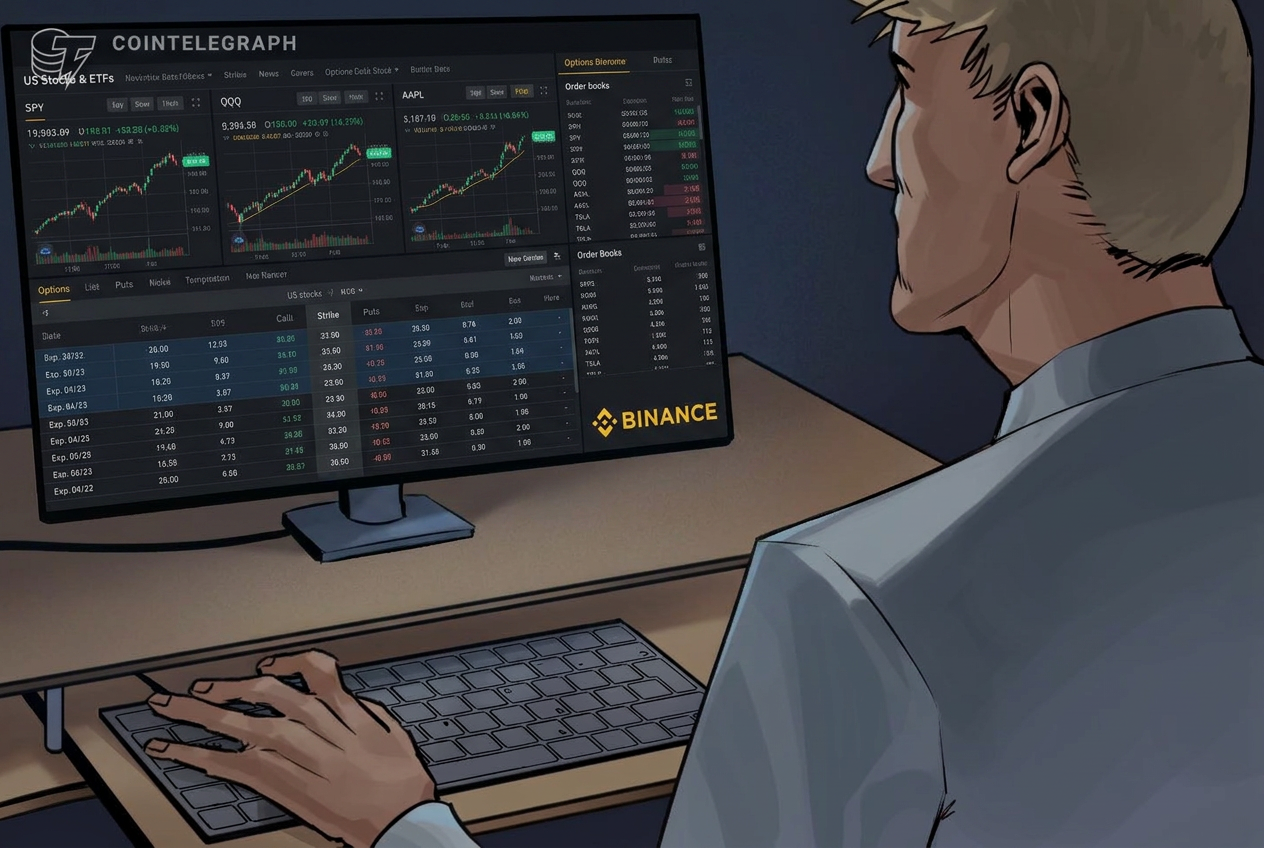
- 01Binance launched options trading across 1,000+ US stocks and ETFs, marking its largest traditional finance move yet.
- 02The expansion targets non-US users and positions Binance as a multi-asset platform competing directly with established brokerages.
- 03This move diversifies Binance revenue streams beyond crypto, reducing regulatory and market concentration risk.
- 04Success depends on whether Binance can maintain security standards while managing exponentially larger asset complexity than crypto alone.
Binance Muscles Into Wall Street: 1,000-Stock Options Launch Signals Crypto Exchange's TradFi Takeover
Binance just crossed a line it's been creeping toward for years. According to CoinTelegraph, the exchange has launched options trading on more than 1,000 US stocks and exchange-traded funds—a move that transforms it from a crypto specialist into something resembling a full-service brokerage. This isn't incremental. It's a structural shift in what Binance is trying to become.
The real question is: why now, and what's the financial calculus here?
Crypto exchanges have been chasing traditional finance assets for roughly five years, but they've mostly dabbled—adding Bitcoin futures here, commodities there. Binance is doing something different. Offering derivatives on the entire S&P 500 plus major ETFs suggests the company isn't testing the waters anymore. It's moving in.
CoinTelegraph reported that this expansion targets non-US users specifically, which is legally shrewd. US regulators have grown increasingly hostile toward unregistered derivatives platforms. By limiting access to international users, Binance sidesteps some immediate regulatory blowback while still capturing massive TAM—the global retail investor base desperate for 24/7 equity derivatives access outside traditional market hours.
And here's what matters to your portfolio: this moves the needle on Binance's business model durability.
Crypto exchanges live or die by trading volume and volatility. Bitcoin rallies, volume spikes, revenue shoots up. Bitcoin consolidates for three months, margins compress, layoffs follow. Binance's crypto-only model is structurally volatile. Adding 1,000+ traditional assets creates revenue diversification. When crypto markets flatline, equities keep trading. When equities crater, crypto often moves independently. It's portfolio hedging at the corporate level.
Competitors like FTX (pre-collapse) and Kraken have pushed into TradFi, but neither achieved Binance's scale or capital reserves. Binance has the balance sheet to absorb the infrastructure and compliance costs. Smaller exchanges can't compete here—and that's the point.
But security concerns shadow this expansion. Binance's history with cyber incidents raises a specific problem: equity derivatives require different custody models, settlement mechanics, and reconciliation systems than crypto. More assets, more complexity, more attack surface. The question isn't whether Binance *can* build this—it's whether the organization can operate it safely at scale.
Consider what a successful hack looks like in traditional derivatives markets. Not hypothetical. In 2023, a single breach of a smaller fintech broker exposed millions of equity traders' data and trade records. Now imagine that happening on a platform processing $billions in daily equity options volume across international jurisdictions.
So what happens next?
If Binance executes flawlessly on compliance and security, this becomes a template for crypto exchanges everywhere. It proves you can bolt traditional finance onto decentralized crypto infrastructure without imploding. If execution falters—especially around cyber security operations and finance cyber attack prevention—regulators will use Binance as the cautionary tale that kills the entire category for years.
The immediate market impact: expect traditional brokerages like Interactive Brokers and Robinhood to pressure their compliance teams about competitive response. Binance just invaded their territory with 24/7 global access. That's a threat.
For retail traders, it's simpler. You can now hold Bitcoin, Ethereum, and Apple stock on the same platform with the same account infrastructure. Operational convenience matters. Binance is betting that convenience plus liquidity plus lower barriers to entry override regulatory and security concerns in the minds of international retail investors.
The real test arrives in the next 18 months. Not whether the platform launches cleanly—that's table stakes—but whether Binance can operate this without a major incident while simultaneously managing crypto volatility, regulatory pressure across multiple jurisdictions, and the operational complexity of reconciling equity and crypto settlement cycles.
That's where the story gets interesting.