Alphabet Stock Drops 7% on $200B 2026 Capex Guidance
Alphabet slides 7% after announcing $200 billion capital expenditure for 2026, signaling aggressive AI infrastructure investment. What it means for tech investors.
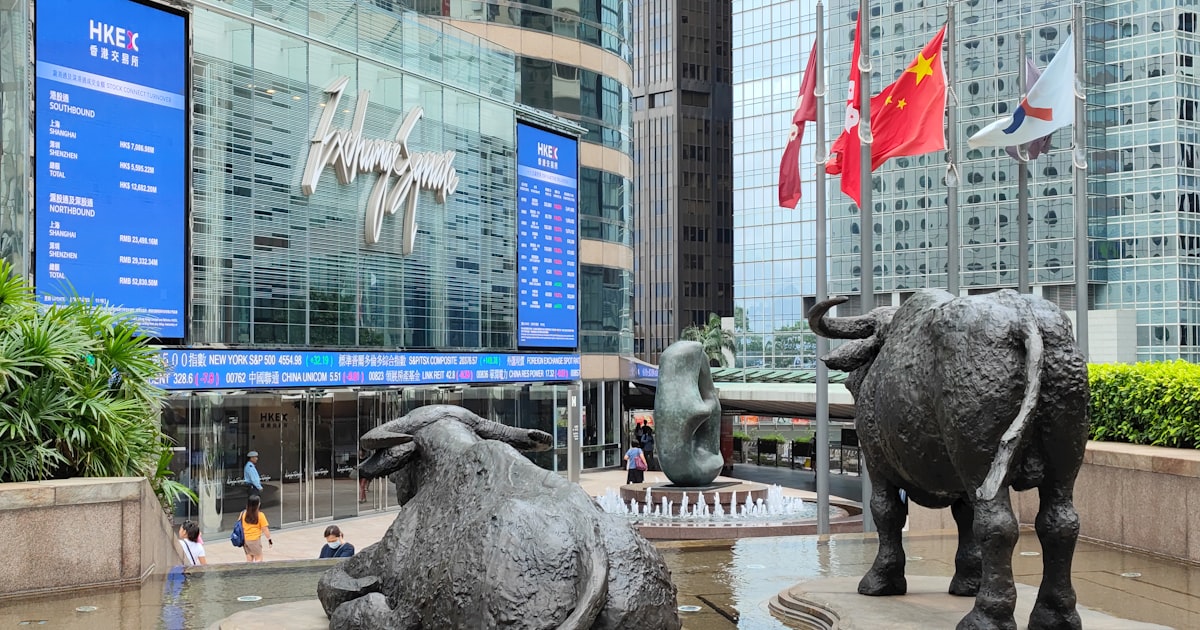
- 01Alphabet stock fell 7% on news of $200 billion capex guidance for 2026, according to Motley Fool reporting.
- 02The massive spending commitment reflects Google's aggressive bet on AI infrastructure and competitive positioning.
- 03Heavy capex now threatens near-term profitability and return on invested capital for the search giant.
- 04Market faces questions about whether AI spending will eventually justify the enormous capital deployment.
Alphabet's $200 Billion Capex Bet Rattles Markets—Here's What It Means for Your Portfolio
Alphabet stock tanked 7% on Wednesday after the company guided investors toward a staggering $200 billion in capital expenditures for 2026, according to Motley Fool. That's not a typo. Two hundred billion dollars. The market's immediate reaction was brutal: sell first, ask questions later.
So why did investors punish one of the world's most valuable companies for announcing a spending plan?
Because capex is the enemy of near-term earnings per share. When Alphabet commits $200 billion to building AI data centers, training infrastructure, and compute capacity, that money doesn't flow to the bottom line. It sits on the balance sheet as fixed assets and depreciation expenses. And depreciation drags down reported profits.
The real question is whether the market has grown skeptical of Google's AI spending thesis altogether.
For months, tech investors have watched the "magnificent seven" pour unprecedented sums into generative AI infrastructure. Nvidia has thrived as the picks-and-shovels vendor. But lately, cracks have formed in the narrative. OpenAI's ChatGPT hasn't converted into dominant enterprise revenue. Google's own Gemini plays catch-up to OpenAI's offerings. And now shareholders are asking: are we throwing $200 billion at infrastructure to solve problems we haven't actually proven exist?
Motley Fool's reporting highlights this as a distinct catalyst from broader tech weakness—this isn't contagion from Tesla or sector rotation. This is Alphabet-specific guidance that the market received and immediately re-priced downward. That distinction matters because it suggests investors aren't losing faith in Google's core search business. They're losing faith in whether AI spending will generate a return.
For portfolio holders with significant Alphabet exposure, the 7% drop creates an uncomfortable tension.
On one hand, Alphabet still generates $90+ billion annually in free cash flow. That war chest can absorb $200 billion in capex without destroying the company. The balance sheet remains fortress-like. But on the other hand, capital intensity is rising, and that's a structural shift. If Alphabet commits to $200 billion annually—not just in 2026 but as a baseline—then the company is slowly transitioning from a cash-printing machine to an infrastructure-heavy business. That's a lower-multiple business model. Software-as-a-service companies with 30% operating margins trade at premiums. Capital-intensive tech infrastructure providers? Not so much.
And then there's the cybersecurity angle that's been lurking in the background of market conversations lately.
Massive capex deployments also expand attack surface area. Will there be a cyber attack today targeting tech infrastructure? Will there be a stock market cyber attack today? These aren't rhetorical questions anymore—they're operational risks that institutional investors factor into their models. The more data centers, more compute nodes, and more interconnected systems Alphabet builds, the more exposure it creates to breach, sabotage, or disruption. A stock market cyber attack today could crater valuations across the board, but companies with enormous physical infrastructure footprints stand to lose the most.
Alphabet's guidance suggests management believes the AI opportunity justifies the risk. Investors, at least on Wednesday, disagreed.
Watch for two things in the coming weeks: First, whether other mega-cap tech firms walk back capex guidance to avoid similar punishments. Second, whether Alphabet's stock finds support above the 7% decline or whether the selloff cascades deeper as analysts downgrade earnings estimates to account for higher depreciation. The market's answer to those questions will tell you whether AI infrastructure spending is still a story the Street wants to believe.